Vitamin C and K3 in Cancer: What the Research Shows
High-dose IV vitamin C and vitamin K3 have been studied in cancer. Here is what research shows so far, and what it does not.
The information provided on this website is for educational purposes only and is not intended to diagnose, treat, cure, or prevent any disease. Individual experiences vary. Please consult your licensed healthcare provider before making medical decisions.

Cancer care keeps changing as doctors look for better ways to treat cancer and to help patients cope with treatment. Integrative cancer doctors are often asked about complementary approaches, and with so many options being discussed, every patient should understand what fits their situation, with help from their oncologist and an integrative physician. Chemotherapy itself has also changed over time, and side effects are often better managed than in the past. Two complementary approaches patients often ask about are vitamin C and vitamin K3.
AWAREmed’s approach to cancer care: Supportive and adjunctive care alongside conventional medical treatment.
Vitamin C and Cancer
You may have been told to avoid vitamin C while on chemotherapy. This is because vitamin C is an antioxidant, and many cancer doctors are concerned that antioxidants could interfere with chemotherapy. Researchers have found, however, that vitamin C behaves differently at very high doses given intravenously (IV). In laboratory studies, high concentrations can act as a pro-oxidant and produce hydrogen peroxide, which can damage some cancer cells while healthy cells are better able to protect themselves.
The research history is mixed:
- Two studies in Scotland reported that people with terminal cancer who were given vitamin C at 10 g per day lived longer than earlier patients used for comparison ("historical controls"). A Japanese study reported similar findings. Because these studies did not compare patients in a randomized, controlled way, they cannot show that vitamin C was the reason.
- Double-blind studies at the Mayo Clinic, using vitamin C taken by mouth, found no benefit.
- Researchers later showed that vitamin C by mouth cannot reach the very high blood levels that IV vitamin C can, which is one reason interest has shifted to IV use.
- The National Institutes of Health (NIH) has studied vitamin C as a possible add-on to cancer care. In a 2008 report, NIH researchers found that high doses slowed tumor growth in mice with brain, ovarian and pancreatic tumors. This was an animal study.
High-dose IV vitamin C has since been tested in small, early-phase studies in people, mainly to check safety and quality of life, sometimes alongside chemotherapy. These studies have not shown that IV vitamin C treats cancer or helps people live longer, and larger, controlled trials are still needed.
Vitamin C Combined with Vitamin K3
Vitamin K3 (menadione, or 2-methyl-1,4-naphthoquinone) is a synthetic form of vitamin K. In laboratory studies on human ovarian, breast, endometrial and skin cancer cells, researchers reported that sodium ascorbate (a form of vitamin C) combined with vitamin K3 slowed cell growth at much lower concentrations than either vitamin alone, without the same effect on the healthy cells tested.
The researchers described a type of cell death they called "autoschizic" cell death, in which the cell membrane is damaged and the cell gradually shrinks and loses its contents. They also reported that the combination held cancer cells at an early stage of the cell cycle (a "G1/S block"), reduced their DNA synthesis, increased hydrogen peroxide production and lowered the cells’ own antioxidant defenses.
These results come from cell culture and animal research. They have not been shown to work the same way in people, and the combination is not an approved cancer treatment.
Safety Considerations
- High-dose IV vitamin C is not safe for everyone. People with G6PD deficiency, an inherited enzyme condition, can develop serious breakdown of red blood cells, so testing is needed first.
- It may raise the risk of kidney stones and needs caution in people with kidney disease or iron overload.
- Very high doses can cause falsely high readings on some blood sugar meters.
- Vitamin K3 (menadione) is not used as a vitamin supplement for people in the United States because of safety concerns, including damage to red blood cells and the liver.
- Both may interact with chemotherapy and other medicines.
How AWAREmed Can Help
Dr. Dalal Akoury, MD, MPH, is an experienced integrative physician who works to provide supportive care and reliable information to people living with cancer. Any IV therapy for a person with cancer is offered only as supportive care, after careful screening and in coordination with the patient’s oncologist.
At AWAREmed in Johnson City, Tennessee, Dr. Akoury offers supportive, whole-person care for people living with cancer. This care is meant to work alongside, not replace, the treatment plan from your oncologist, and we coordinate with your cancer care team. Learn more about our integrative oncology support.
Related reading: IV NAD and cancer: what the research shows
Questions? Call us at (423) 430-6170 or book a consultation.
Learn more about Dr. Akoury and her approach, explore our integrative services, or contact our care team with your questions.
Why Patients Choose AWAREmed in Johnson City, TN
Physician-Led Care
Every plan starts with an evaluation by Dr. Dalal Akoury, MD, MPH.
A Personalized Approach
Care is shaped around your health history, your goals and your daily life.
Works With Your Doctors
Integrative, supportive care alongside your primary and specialty physicians.
In Person or Virtual
Visits at our Johnson City office; consultations can also take place online where licensing rules allow.
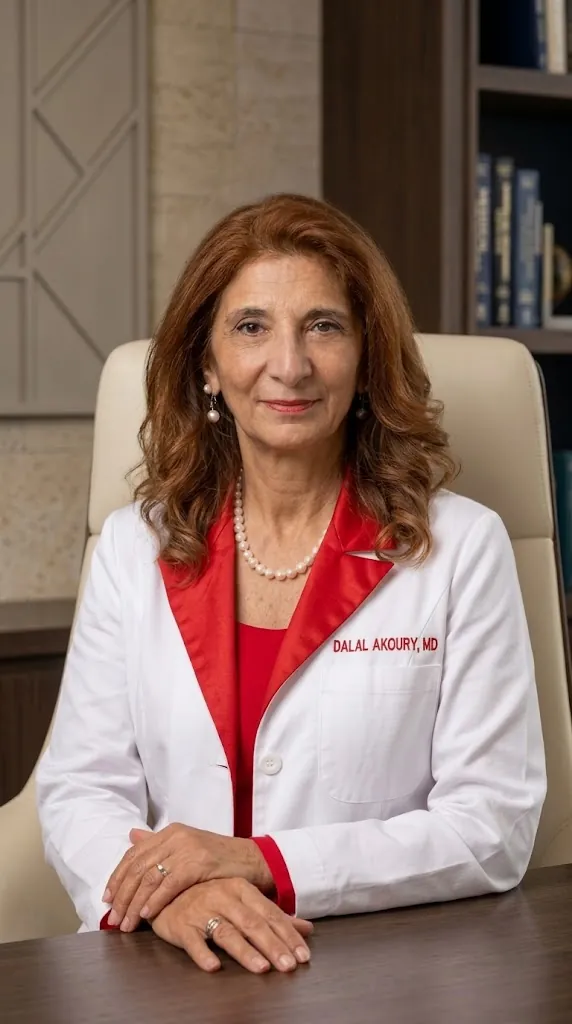
Meet Dr. Dalal Akoury, MD, MPH
Founder and Medical Director of AWAREmed Health and Wellness Resource Center.
Learn more about Dr. AkouryVisit Us in Johnson City, Tennessee
AWAREmed Health and Wellness Resource Center1604 Lamons Lane, Suite 202
Johnson City, TN 37604
(423) 430-6170
We welcome patients from Johnson City, Kingsport, Bristol, Greeneville and the surrounding Tri-Cities area, and we also offer virtual visits.
Take the First Step Toward Personalized Care
Book an appointment with Dr. Akoury to discuss a personalized, whole-person care plan that works alongside your oncologist’s treatment.